A Case Study in Wildfire Defense and Home Hardening
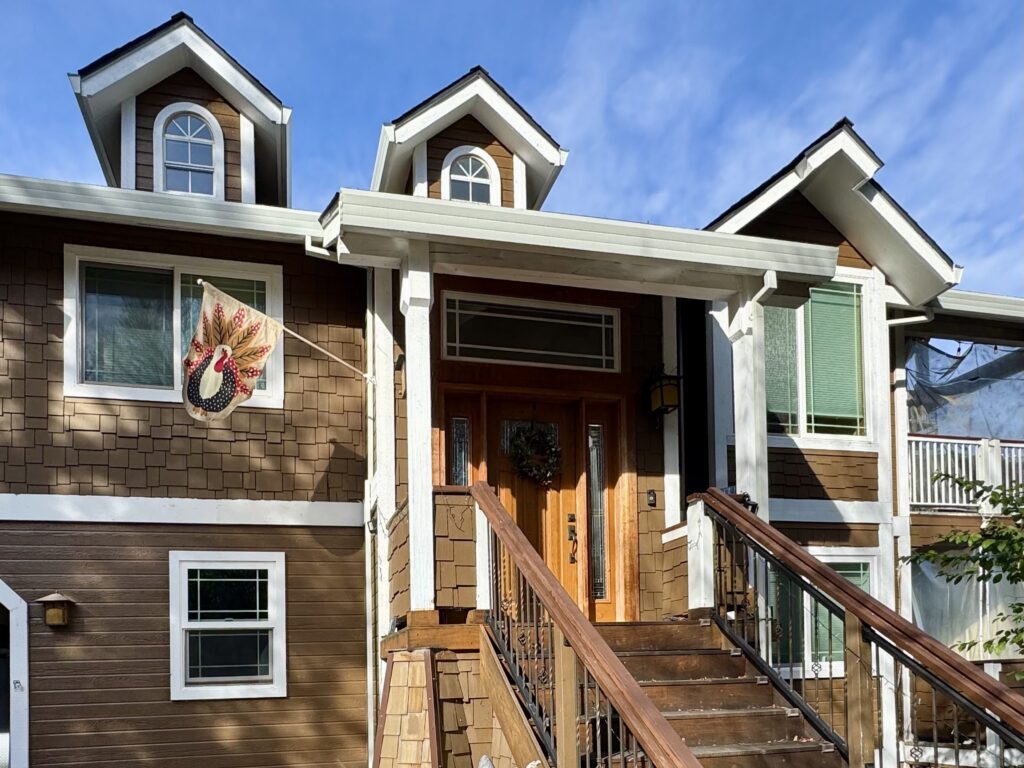
We embarked upon improvements to our property that includes Calfire recommendation for a combination of Home Hardening and Defensible Space to give your house the best chance of surviving a wildfire. Our solution is not perfect by any means as compromises are always inevitable. But, as a work in progress, this is also a case of what can be achieved in one season.
Background
The Gold Country is beautiful but challenging. Every home is unique, so this should not be considered a definitive solution for all properties. If you’d like to discuss your specific situation, feel free to contact me at jtswift@swiftenvirons.com. Every home is unique, so this should not be considered a definitive solution for all properties. If you’d like to discuss your specific situation, feel free to contact me at jtswift@swiftenvirons.com
Why?
We recognize that any home can be caught in a fire. From recent experience, if the heat, wind and force of a fire is extraordinary, unfortunately no wood-framed home can survive. But we embarked upon reasonable improvements to improve the resiliency of the home – to improve the chances for survival. It’s a risk of living in California or any fire country.
Codes, insurance and Calfire. The new California Building commits the state to higher standards for fire resiliency, starting January 2026. What that means varies depending on timing of adoption by local fire agencies. Insurance companies are the biggest driver, raising rates and dropping longterm customers. Complying with the new code gives not only better physical survivability
There are many good resources out there. SwiftEnvirons hosts experts on air quality, fire and resiliency. If you want to learn more, Abdel Darwich, PE has a compelling and informative presentation on the topic.
Case Study: Gold Country Residence
This house, a 3200 square foot, two story 1980s wood frame on sloped site, has unique aspects. For instance, more than half of the eaves are 15-20′ above grade. Originally, we thought that would mitigate fire, but we quickly found out there was no exception for that issue.
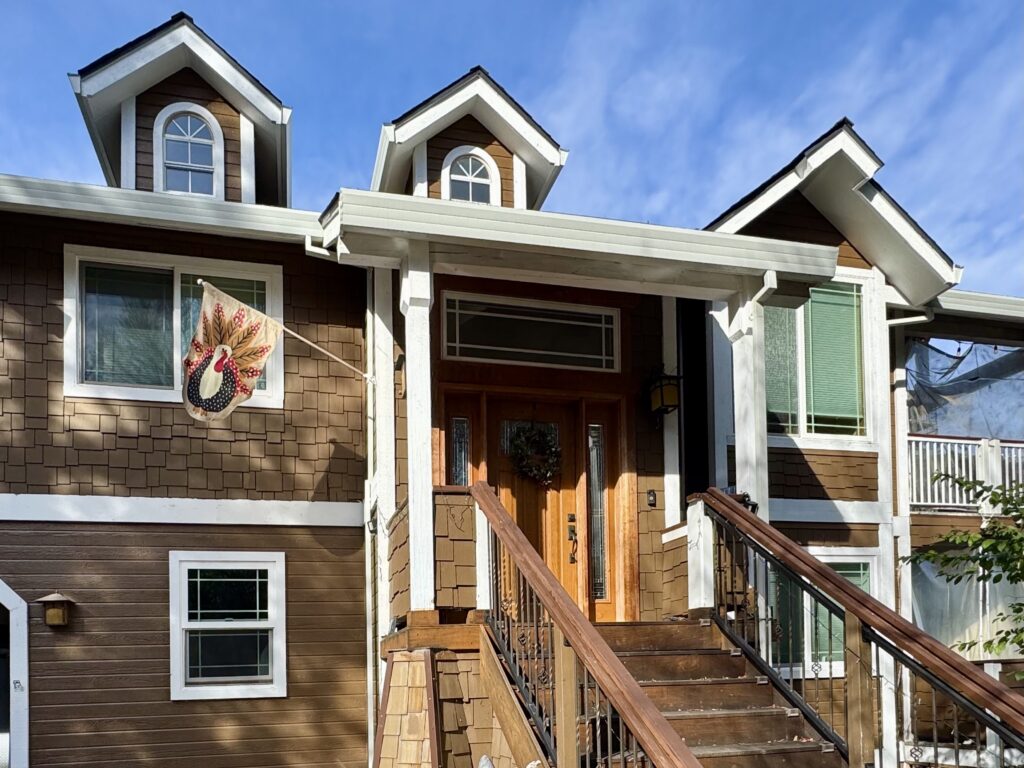
We recently re-roofed with a Class A asphalt shingle, including gutter protection from leaves. About half the walls are cementitious Hardie boards. The windows are high quality Milgard vinyl. We love the windows, but they could be a problem in the future. For us, we have spent the last 15 years replacing old aluminum windows so it was not in our interest to replace the windows – again!
Defensible Space
On aspect identified by Calfire is a set of measures to reduced flammable fuel on the site. What did we do?
We removed four 60-foot Coast Redwoods located closest to the house. These trees had aged out and were not well suited to the local climate. Their stumps were substantial—several required professional grinding for complete removal. On the upside, the project left us with a generous supply of firewood, likely enough to last for a decade.
We removed twelve oak trees following a careful assessment of each tree’s age, health, and spacing. The work required formal approval from the HOA, ensuring that the removal aligned with community guidelines and long-term landscape planning.
We pruned the remaining oaks to remove dead or declining branches and to improve overall tree health. This work also enhanced the trees’ structure and appearance, promoting healthier growth and a cleaner, more balanced canopy.
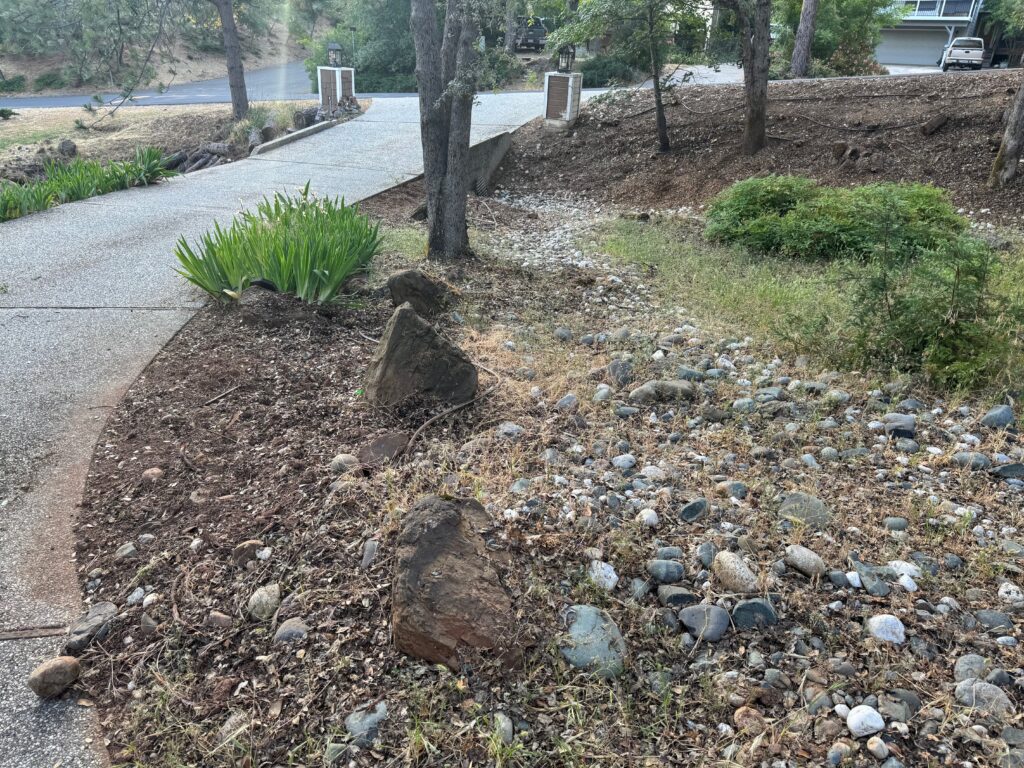
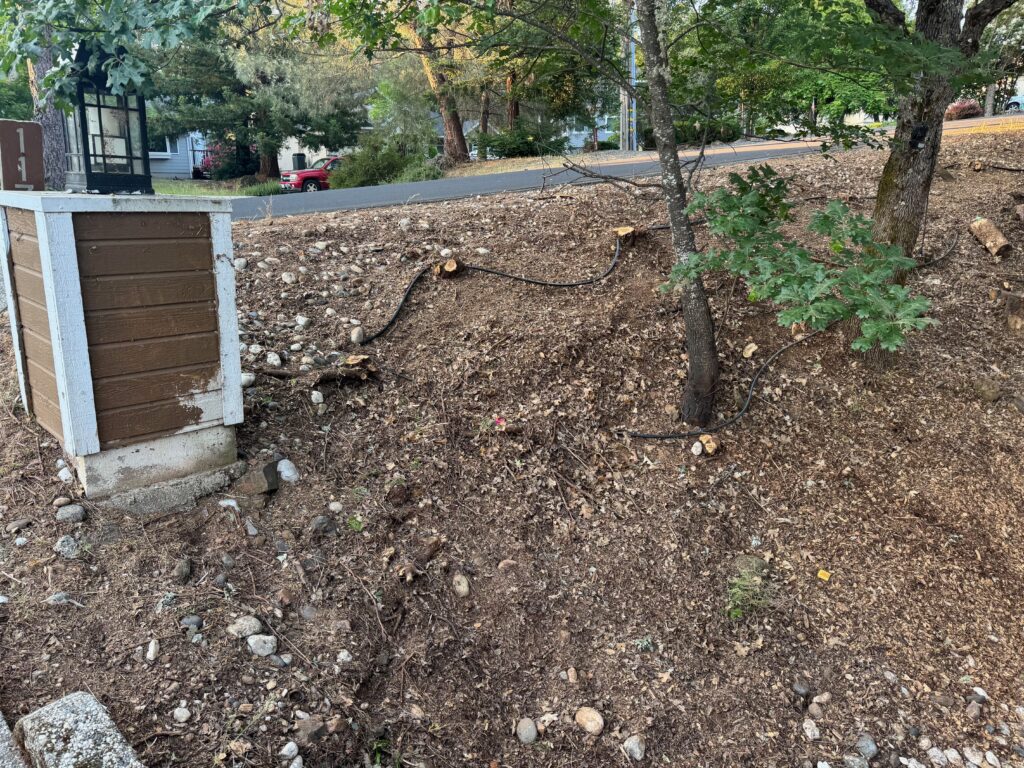
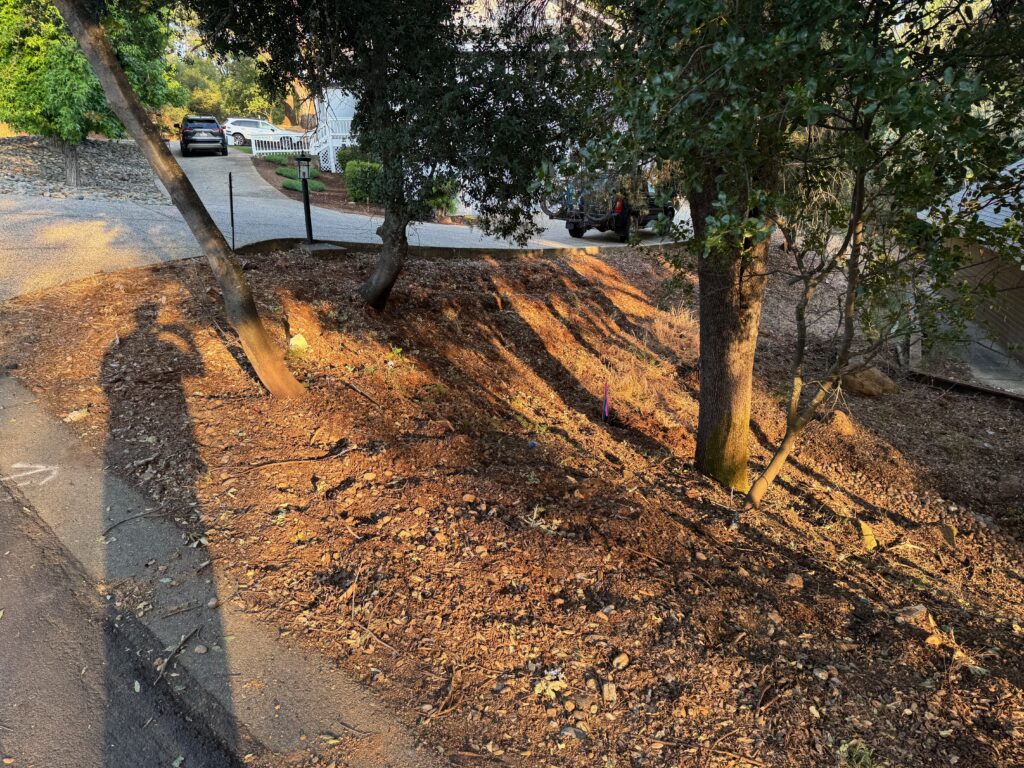
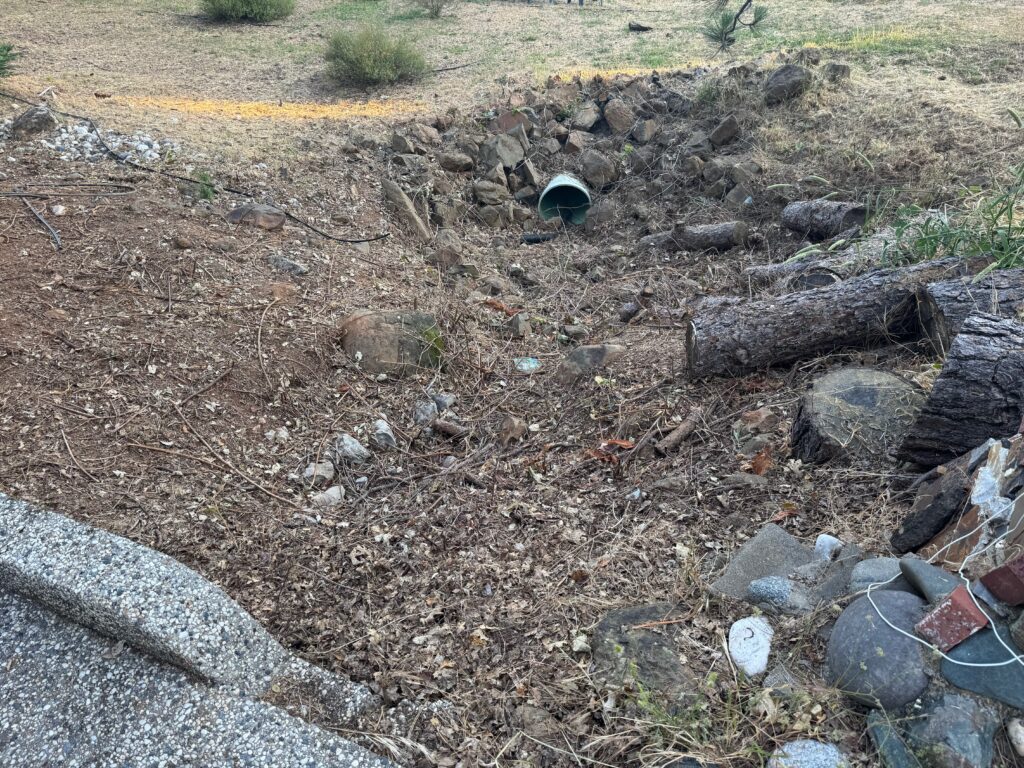
We undertook what we jokingly called the “Juniper Murder Program” — the removal of roughly 5,000 square feet of decades-old, overgrown juniper. Clearing the sections closest to the house took considerable time and hand labor, while the larger outer areas were efficiently removed in a single day by a landscaping crew equipped with a backhoe and other machinery. The result is a much cleaner property perimeter with significantly improved sight lines along the street.
Ongoing leaf and debris removal is a continual chore. This includes removal of material from the gutters, ground plane and landscape.
Home Hardening
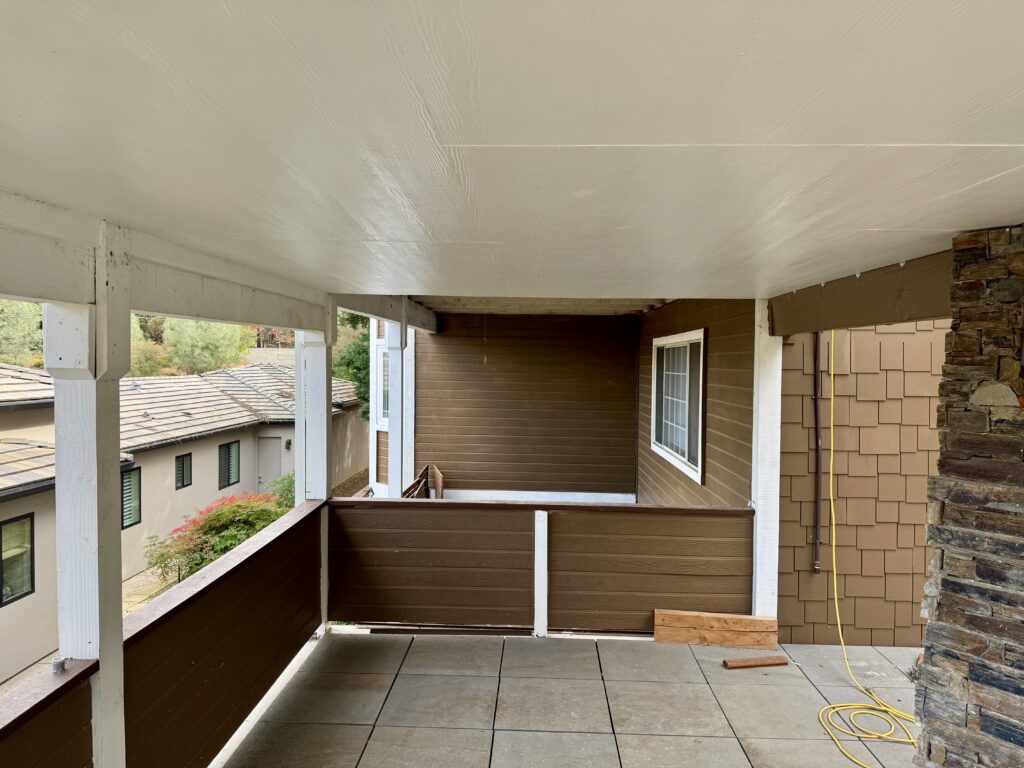
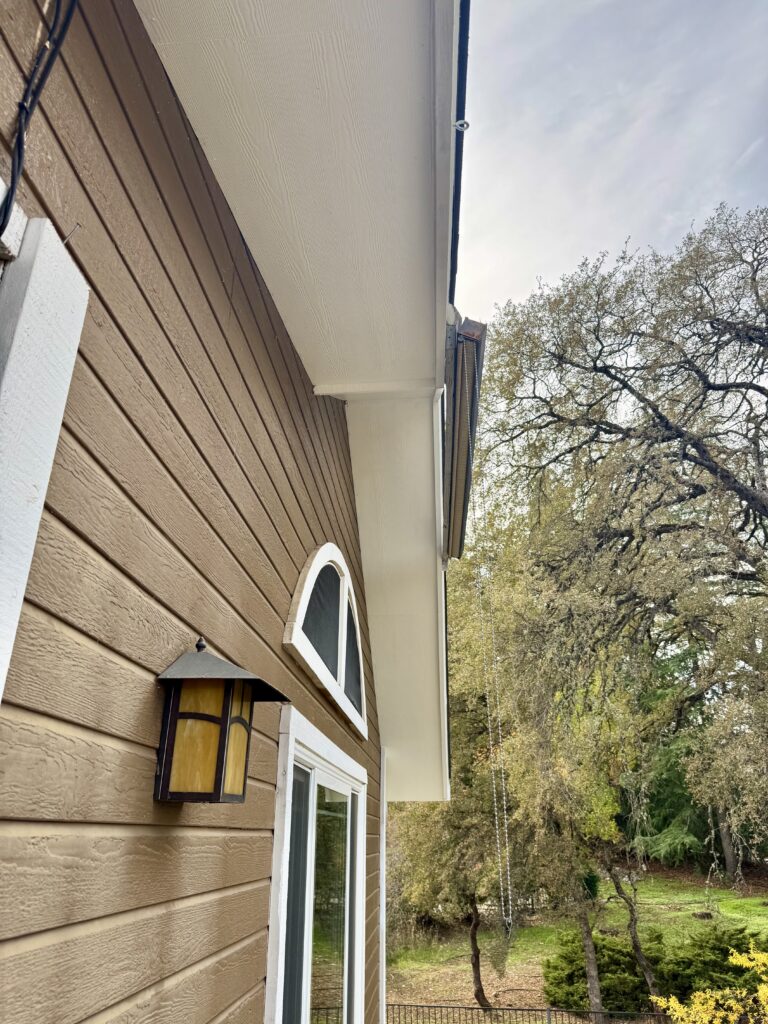
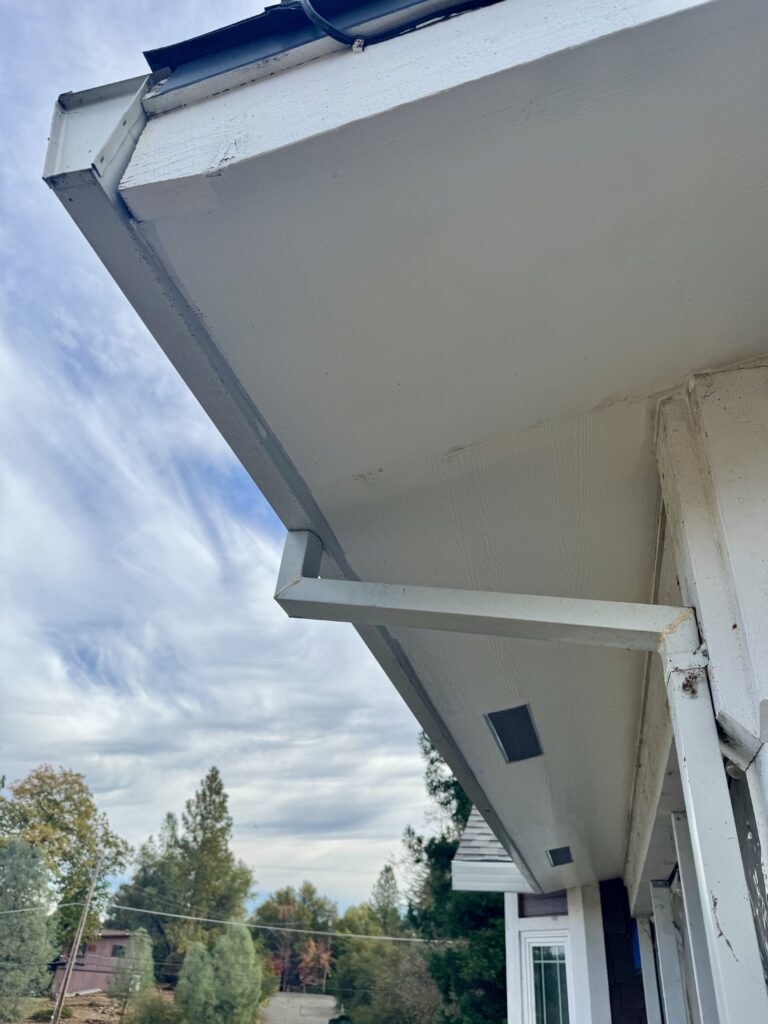
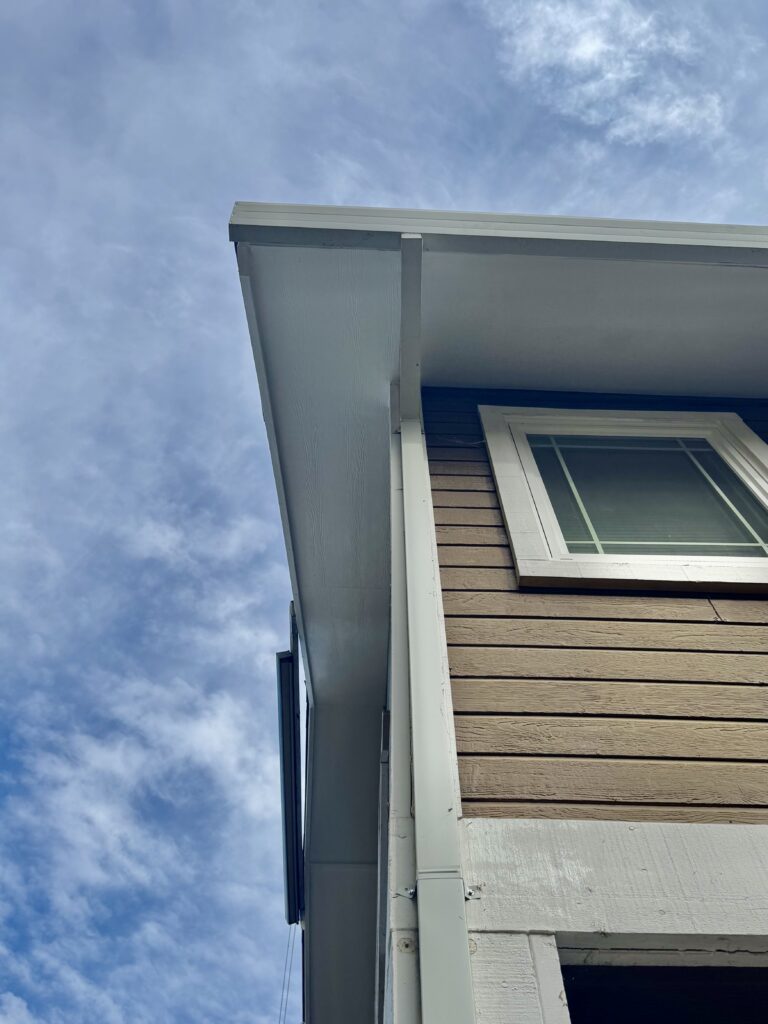
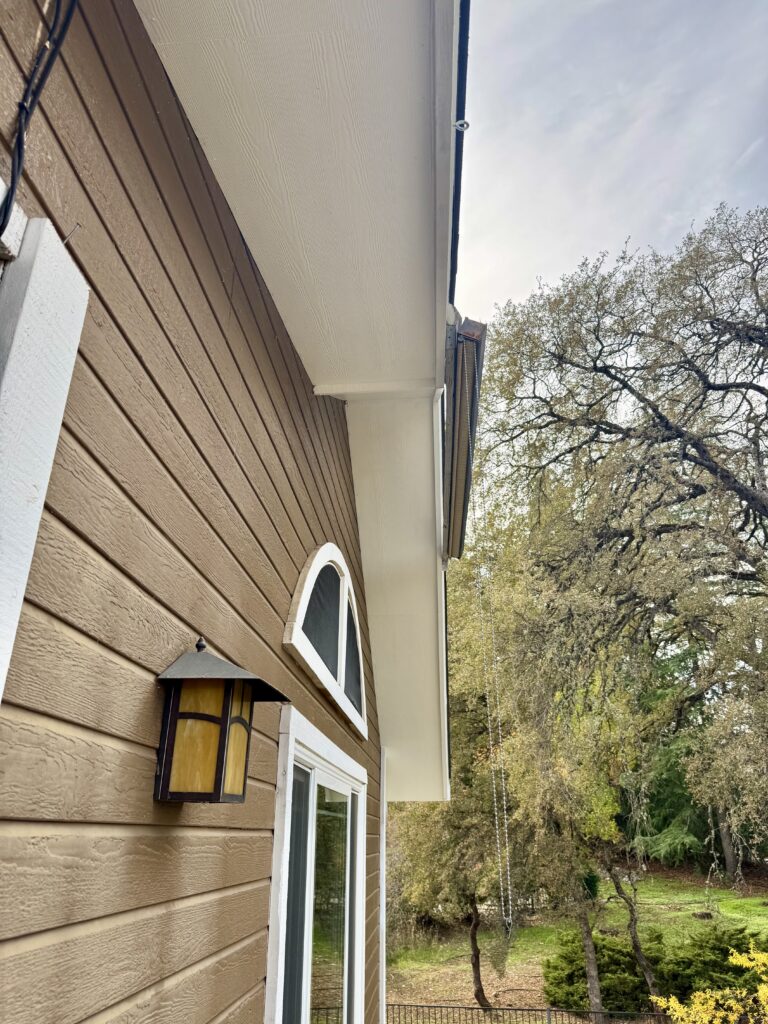
This home already has a substantial amount of Hardie cement siding. We chose this originally for the integral color. The plan was to use Hardie Soffit on the undersides of the soffits and as the ceiling for our outdoor deck. The contractors also selected a Calfire approved soffit vents that restrict embers from entering an attic space. We had to ensure that materials were approved, which negated other materials. The contractor installed scaffolding and the installation was completed efficiently. The result is a cleaner, lighter appearance.
To complete the final detailing, we removed the old lattice-style deck skirts and replaced them with metal panels wherever feasible. We were fortunate to find a panel system with powder coating that matched the home’s exterior color, resulting in a cleaner, more durable, and cohesive finish.
What’s Next?
This work is part of an ongoing effort—every home requires continual maintenance. Some of the removed plant material has already begun to sprout back, and over time we expect additional areas to need attention now that the dense juniper no longer suppresses weed growth. We have a little work to permanently reduce the irrigation system, with the benefit of reduced water use and cost. On the positive side, the new cement soffits will make routine upkeep much easier; clearing cobwebs and removing wasp nests will be far simpler than before.
Was it worth it? On one hand we hope to never have to test it. On the other, we can feel confident we have taken all the steps possible to improve our home, making it more resilient, maintainable while not sacrificing appearance or function.
If you want to learn more, contact Joel at jtswift@swiftenvirons.com

0 Comments